
Mactec Packaging Equipment
Choosing a Transdermal Patch Packaging Machine
Transdermal patches, hydrogel patches and foam pads have something in common: they are flat, often sticky, and they need to be placed into a pouch, not poured. Buyers often come to us with patches being placed by hand onto a pouching line by several people, or with a plan to cut and pack patches in one step.
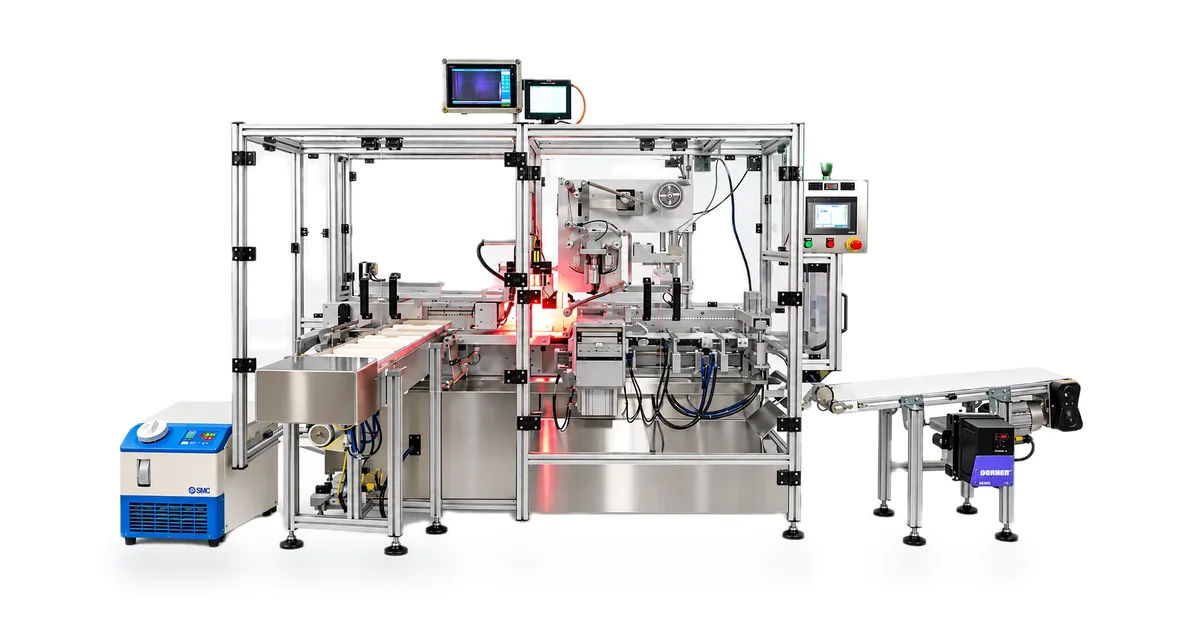
This guide covers the decisions that shape a patch packaging project and what to send us so we can review it.
Why use horizontal pouching for patches?
There are two common ways to make a pouch on a form-fill-seal machine (a machine that forms the pouch from rolls of film, fills it and seals it):
- Vertical form-fill-seal drops a measured dose, such as a liquid, powder or count of tablets, into a pouch formed on a vertical path.
- Horizontal form-fill-seal carries the bottom web flat, so a product can be placed on it in a set position before the top web is sealed over it.
A flat patch needs controlled placement, which is why horizontal pouching is the usual starting point. Our vertical vs. horizontal pouch packaging guide explains the difference in more detail.
The MTHP150 horizontal pouch machine lists transdermal patches among its supported applications. It forms, feeds, seals, perforates and cuts four-sided-seal pouches. Published figures include a forming area of approximately 120 mm × 160 mm, a maximum web width of approximately 160 mm, and a speed of 10–30 cycles per minute, depending on product characteristics. Single- or multi-lane arrangements depend on pouch size and product layout. A transdermal patch application video is on the model page.
How will the patch get into the pouch?
Loading is where most of the design decisions sit. There are three broad approaches:
- Manual placement. An operator places each patch on the web. This is the simplest start and suits lower volumes or frequent product changes. People set the pace.
- Magazine loading. Patches are stacked in a magazine, a holder that releases them one at a time onto the web. This needs patches that separate cleanly from each other.
- Pick-and-place. A mechanism picks each patch, often from a cutting step or a tray, and places it in position. The MTHP150 offers pick-and-place customization and vision-system options for suitable applications.
Many buyers want to start with manual loading and automate later. That can work, but describe both stages up front. Don’t assume an automatic feeder can be added to any machine later; some provisions need to be designed in from the start.
Do the patches need to be cut first?
Patches usually begin as a laminate on a roll: backing, drug or gel layer, adhesive and a release liner. Turning that roll into individual shaped patches is called converting, and it usually includes die-cutting.
Tell us whether your patches will arrive already cut, or whether you want cutting and packaging in one machine. If cutting is part of the job, that is a custom engineering discussion. We either adapt a proven platform or design a machine for your product case by case.
What about liners, adhesive and moisture?
Patches create handling problems that tablets and powders don’t. Questions we work through with you:
- Which side faces up in the pouch, and does the release liner (the protective layer peeled off before use) stay on?
- Does any adhesive extend to the patch edge, where it could stick to guides, grippers or tooling?
- How much clearance is there between the patch and the seal area, so the seal stays clear of product and adhesive?
- For hydrogel patches, how moist is the surface, and does it release cleanly from handling parts?
- What pouch material has your stability work specified, and does the pouch need a tear notch or child-resistant features?
Representative samples matter here more than drawings. A drawing won’t show how a sticky or soft patch behaves during feeding.
What should be printed and inspected?
The MTHP150 offers product coding options, including lot and expiration information, and variable-data printing. Inspection is configured per project. A vision check can confirm a patch is present, and print verification, meaning reading the printed code with a camera to check it (OCR/OCV), is reviewed for each project. Tell us whether you need print positioned correctly or read and verified, because those are different requirements.
Where does the labor saving come from?
When patches are placed by hand along a line, people do the placing, checking and moving of packages. A horizontal pouch machine takes over pouch forming, sealing, cutting and coding. Depending on the loading method, it can also take over placement. The saving depends on your volumes, your staffing and how much loading stays manual. Ask us to evaluate the loading method against the finished output you need and the people you have.
What should you send us?
- Patch samples (several, including any that are hard to handle), with dimensions and thickness
- Whether patches arrive cut, or you need cutting as well
- Liner and adhesive layout, and which side faces up
- Pouch material, pouch size and any tear notch or child-resistance needs
- Patches per pouch and pouches per day or week
- Printing and inspection requirements
- Current process and staffing, if you pack by hand today
- Plans for automation later
Ready to review your patch?
Start with the MTHP150 model page and download its spec sheet, or compare options on our pouch packaging machines page. For cutting or special handling, see custom packaging machines. For staging automation, read Manual vs. Automated Packaging. Then request a quote and send samples. Where practical, we run them on a Mactec machine at our facility.
Related buyer guides
- Medical Device Pouch Packaging: Materials and Loading
- Packaging Machine Integration with Robots and Integrators
- Vertical or horizontal pouch packaging?
Discuss your project with Mactec
Request an equipment quote using the existing inquiry form. You do not need a finished specification. If you are unsure where to begin, contact Mactec.