
Mactec Packaging Equipment
Medical Device Pouch Packaging: Materials and Loading
Medical device pouch packaging covers a wide range of products. Buyers come to us with surgical blades, electrodes, wound dressings, small kits, hearing devices, lab plates and printed cards. The products differ, but the questions are usually the same: which pouch material, how the device gets into the pouch, what has to be printed, and how much should be automated on day one.
This guide walks through those decisions so you can describe your project clearly, whether or not you buy from us.
Should the device go into a vertical or a horizontal pouch machine?
Start with how the product enters the pouch.
A vertical form-fill-seal machine forms pouches from rollstock (film supplied on a roll), fills them from above, then seals and separates them. It suits measured doses such as liquids, powders, tablets or capsules. Our MTVP160 and MTVP200 work this way.
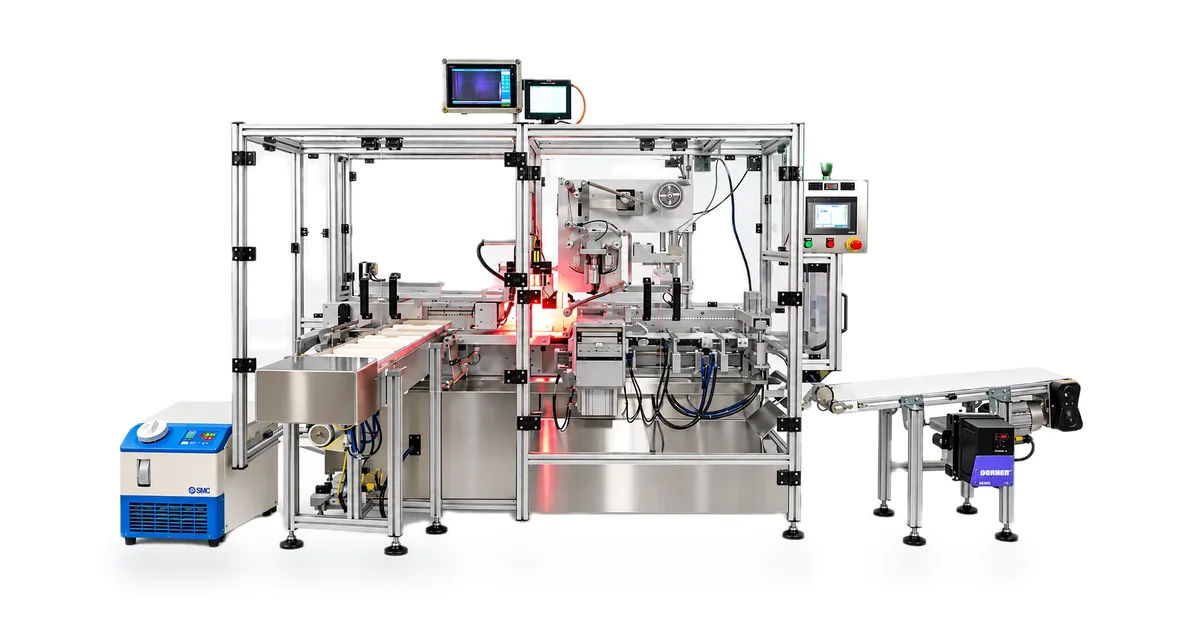
A horizontal form-fill-seal machine is the usual starting point for products that must be placed, not dropped. Blades, electrodes, dressings, patches and cards generally need controlled placement and orientation. Our MTHP150 forms, feeds, seals, perforates and cuts four-sided-seal pouches, and it is listed for medical devices and other placed products.
If you are not sure which side your product falls on, our vertical vs. horizontal pouch packaging guide covers the trade-offs.
Tyvek or foil: what should we decide before choosing a machine?
The pouch material is usually set by your product and quality requirements, not by the machine. Tyvek (a breathable spunbonded material often paired with a film) and foil laminates behave differently, and that affects sealing and tooling.
Questions buyers often work through with their quality team before talking to us:
- Does the package need to let a sterilant in, or keep moisture and light out?
- Is the pouch two different materials (for example, a Tyvek side and a poly or film side), or one material folded and sealed?
- Has the material combination already been sealed and tested somewhere else?
We work with medical-grade materials such as Tyvek and foil structures. The exact material combination and seal requirements are tested for each project, so send samples of the material you plan to use.
- Will the pouch be sterilized after packaging?
Send us the material specifications and, ideally, roll samples. A result with one material combination does not prove that a different combination will seal the same way, so we test with the material you actually plan to use.
Manual loading or automatic loading?
This is the biggest decision, and you do not have to make it all at once.
Many medical device programs start with an operator placing each item into the pouch while the machine forms, seals, prints and cuts. That keeps the first investment focused and lets you learn how the product behaves. Later, when volume grows, a magazine loader, pick-and-place system or robot can take over the placement step. The MTHP150 offers custom pick-and-place options for suitable applications.
The catch: do not assume an automatic feeder can be bolted onto any machine later. If you expect to automate, tell us at the start. We can then review which provisions should be designed in now and which additions would need further engineering. Our manual vs. automated packaging guide lists the questions to ask.
Medical device pouching with variable lot and expiry printing before sterilization, built for manual loading now and more automation later, is one of the applications we discuss on our custom packaging machines page. Our medical device packaging machinery page covers the wider range.
What printing and inspection does the pouch need?
Buyers commonly ask for lot number and expiry printing, and sometimes for a camera to check the print. These are separate requirements:
- Printing places variable data on the pouch. Lot numbers, expiration dates and other variable data can be printed in line; the printer type depends on the package.
- Positioning checks that the print lands in the right place.
- Print verification (often called OCR/OCV, meaning the camera reads the text or confirms it matches what was expected) checks that the content is correct.
Our pouch machines can add a tear notch and inline printing or coding, including lot and expiration information. A zipper can be evaluated as a custom configuration. UDI printing (the Unique Device Identifier used for medical device labeling) and print verification are reviewed for each project. The MTHP150 also has vision-system options. Tell us which of these you need so the proposal covers the right equipment.
Can one machine run several pouch sizes?
Often, yes. Buyers frequently want one machine to cover several pouch sizes, such as a family of dressings or kits. Change tooling lets one machine run different formats, and tooling changes are designed to be quick, often taking minutes. The time depends on the machine, the tooling and the product.
List every pouch size you plan to run, and mark which are settled and which may change. Each format needs its own review, and the forming area on each model sets the limits. The MTHP150 lists a forming area of approximately 120 mm × 160 mm; the vertical MTVP200 lists approximately 140 mm × 200 mm.
What should we send for a medical device pouching quote?
- Product samples, with dimensions and any handling restrictions (sharp edges, fragile parts, orientation)
- Pouch drawing or a sample of your current pouch
- Pouch material specifications and roll samples, if available
- Every pouch size you plan to run now and later
- Printing needs: lot, expiry, UDI, and whether print must be verified
- Any other features you need, such as a tear notch or a zipper
- Target output, batch sizes and shifts
- How you load today, and when you expect to automate
- Cleanroom or regulated-area requirements
If your product or package is confidential, we can sign a confidentiality agreement before you share drawings or samples. Our packaging equipment RFQ checklist covers the remaining details.
Ready to talk about your pouch?
You do not need a finished specification to start. Send us what you know through the request a quote form, or download the spec sheet from the MTHP150 model page to compare it with your pouch. Where practical, we run your samples on a Mactec machine at our New Jersey facility before you commit.
Related buyer guides
- Choosing a Transdermal Patch Packaging Machine
- Packaging Machine Integration with Robots and Integrators
- Vertical or horizontal pouch packaging?
Discuss your project with Mactec
Request an equipment quote using the existing inquiry form. You do not need a finished specification. If you are unsure where to begin, contact Mactec.