
Mactec Packaging Equipment
What Drives Packaging Machine Cost? A Buyer’s Guide
“What does a packaging machine cost?” is one of the first questions buyers ask us. It is also the one we cannot answer from a model name alone. Two machines with the same model number can be very different purchases once feeding, tooling, printing and inspection are added.
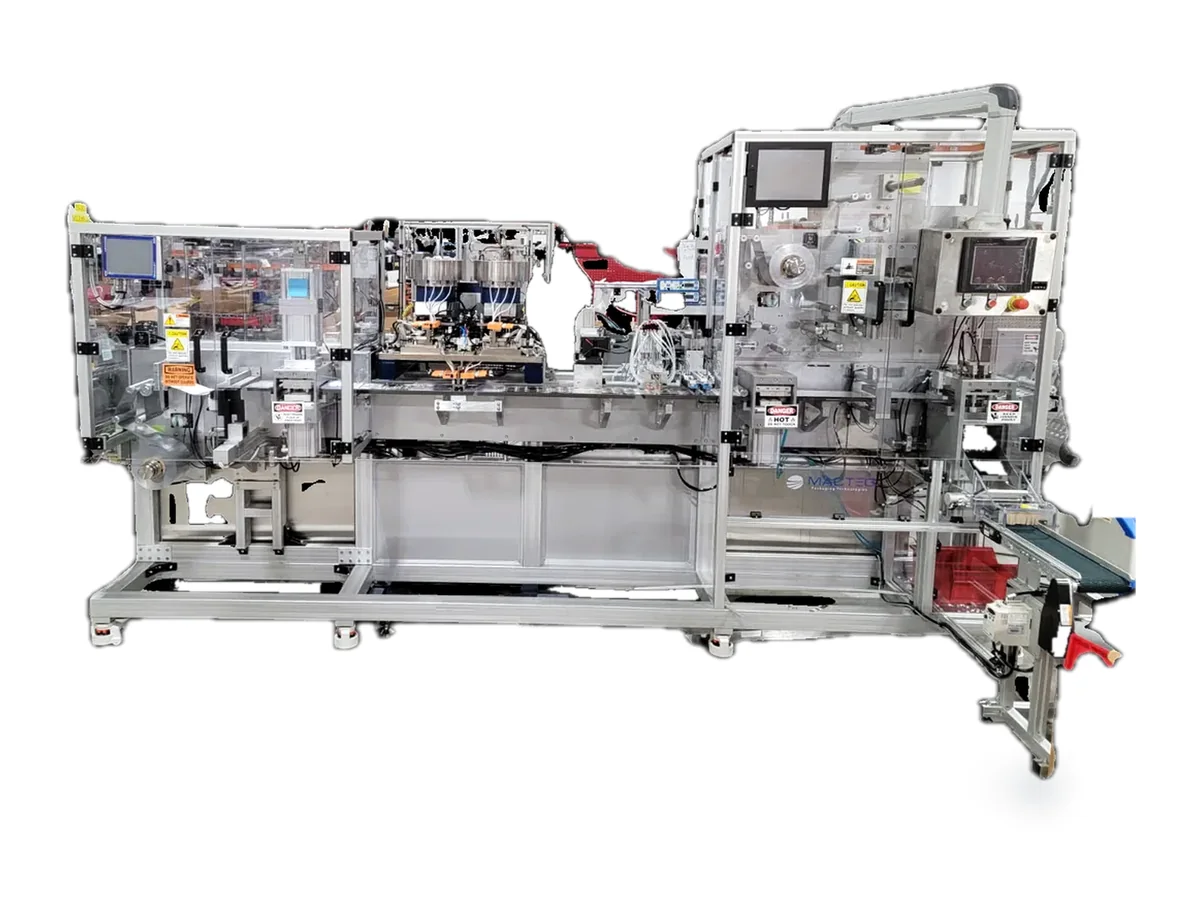
This guide explains what actually moves the price of a blister, pouch or filling machine. It also covers how to phase a purchase and what to send so a budgetary quote reflects your real project.
Why can’t a supplier quote from the model name?
A model name describes a platform: the frame, the forming or filling stations, the controls. Your project adds the parts that make that platform run your product.
That is why our budgetary proposals separate the base machine from options such as feeders, printers, inspection equipment, tooling and change parts. You can see what each choice adds and decide what you need now. A budgetary proposal is a starting point for capital planning, not a final machine specification.
Which choices have the biggest effect on cost?
1. How the product gets into the package. An operator placing each item by hand is the simplest arrangement. Automatic feeders, magazine loaders and pick-and-place systems that separate, orient and place product add engineering and equipment. For many projects, loading is one of the largest variables in the quote.
2. Number of lanes or cavities per cycle. A machine that makes one package per cycle and one that makes several “up” (several packages side by side each cycle) can be the same platform with very different tooling and feeding.
3. Tooling sets for each format. Each blister, pouch or container format needs its own change tooling. Three package sizes means three sets to design and build. List every format you plan to run so nothing is quoted twice or missed.
4. Printing and coding. Lot numbers, expiration dates and other variable data can be printed in line. The printer type depends on the package, and UDI printing for medical devices is reviewed for each project.
5. Inspection and rejection. Vision checks for product presence, pinhole detection and print verification (a camera that reads or confirms the printed text) are configured per project. Positioning a code and verifying its contents are different requirements, and they cost differently.
6. Material and forming method. On blister machines, thermoforming (heating plastic film to shape the cavity) and cold forming (pressing a foil laminate into shape without heat) are different processes. Our NANO-XL and MT-150XL blister machines support either one, but the choice affects the tooling.
7. Conveyors, discharge and integration. What happens after the machine matters. Discharge conveyors, connections to a cartoner, or a robot cell built by an integrator all add interfaces to design and test. For steps outside our platforms, such as counting, capping or labeling, we coordinate specialist suppliers.
8. Documentation and validation support. Regulated buyers often need validation documents. We provide validation documentation support, including IQ/OQ protocol support (Installation and Operational Qualification, the formal checks that a machine is installed and runs as specified). Tell us the documentation package your quality team expects.
9. Changeover expectations. If you change products several times a day, quick-change tooling and how easy it is to clean the machine become important design points.
Why do some machines look so much cheaper?
Buyers sometimes compare a quote with a tabletop unit, a machine in stock or a used machine. Each can be the right answer for the right job. If you are replacing existing equipment, we can review it and discuss trade-in options case by case. Before comparing, check that the options do the same work:
- Does it form, fill and seal, or only seal a pre-made package? A table-top blister sealer handles the sealing step only.
- Is loading included, or will an operator do it?
- Is tooling included for every format you need?
- Are printing, inspection and rejection included?
- Who installs it, validates it and trains your staff?
- Where do spare parts come from, and who services it?
A cycle rate alone does not tell you finished output. Compare acceptable finished packages under defined conditions, including operator work and changeovers.
Can we buy in phases?
Yes, and many buyers do. A common path is to start with manual loading, prove the package and the market, then add automation as volume grows.
The key is to say so at the start. Do not assume an automatic feeder can be added to any machine later. Ask which provisions must be designed in now and which additions would need more engineering. Our manual vs. automated packaging guide walks through those questions.
Our tooling services also let you add new products or formats to a machine you already own, so you do not have to buy every format up front.
If spreading the cost over time would help, we do not finance equipment directly, but we can introduce you to the financing companies we work with. See our financing options page.
What should we send for an accurate budgetary quote?
- Product samples and a description of how the product behaves (fragile, sticky, liquid, powder)
- Package drawing or a sample of the package you want
- Packaging material specifications
- Every format you plan to run, now and later
- Target output in finished packages, plus shifts per day
- Which steps stay manual and which you want automated
- Printing, coding and inspection requirements
- Equipment before and after the machine
- Validation and documentation expectations
- Available space and utilities
- Your timeline
Our packaging equipment RFQ checklist covers these in more detail.
Ready for a budgetary number?
You do not need a finished specification to start. Send us what you know through the request a quote form, and we will prepare a budgetary proposal that separates the base machine from each option. You can also read how a Mactec project works from first conversation to factory acceptance testing.
Related buyer guides
- How to Work Out the Packaging Machine Speed You Need
- In-House Packaging vs. Contract Packaging: How to Decide
- Prepare a packaging equipment RFQ
Discuss your project with Mactec
Request an equipment quote using the existing inquiry form. You do not need a finished specification. If you are unsure where to begin, contact Mactec.