
Mactec Packaging Equipment
Blister Packaging Materials: PVC, PVDC, Aclar or Foil?
Buyers often ask us which blister material they should use. Amber PVC for a light-sensitive tablet, a clear tray with printed lidding for confectionery, PVC/PVDC with aluminum lidding for capsule cards, cold-form foil for a product that needs full protection. The material choice affects more than the package. It decides how the blister is formed, which tooling you need and how the package is sealed.
This guide explains the common options in plain terms. Your stability data and your materials supplier have the final word on what your product needs.
Why does the material decide so much?
A blister has two parts: the forming film, which is shaped into cavities, and the lidding, which is sealed over them. Change either one and you may change the forming method, the sealing conditions and the tooling.
As our blister sealer vs. form-fill-seal guide puts it, a result with one material combination does not establish suitability for every other combination. That is why we ask for your proposed materials early.
What is the difference between thermoforming and cold forming?
Thermoforming heats a plastic film until it softens, then forms it into cavities. The result is usually clear or tinted, so the product can be seen.
Cold forming stretches an aluminum-based laminate into cavities with a plug, without heat. The result is opaque. Because foil can’t be drawn as sharply as heated plastic, cold-form cavities generally need more area for the same product.
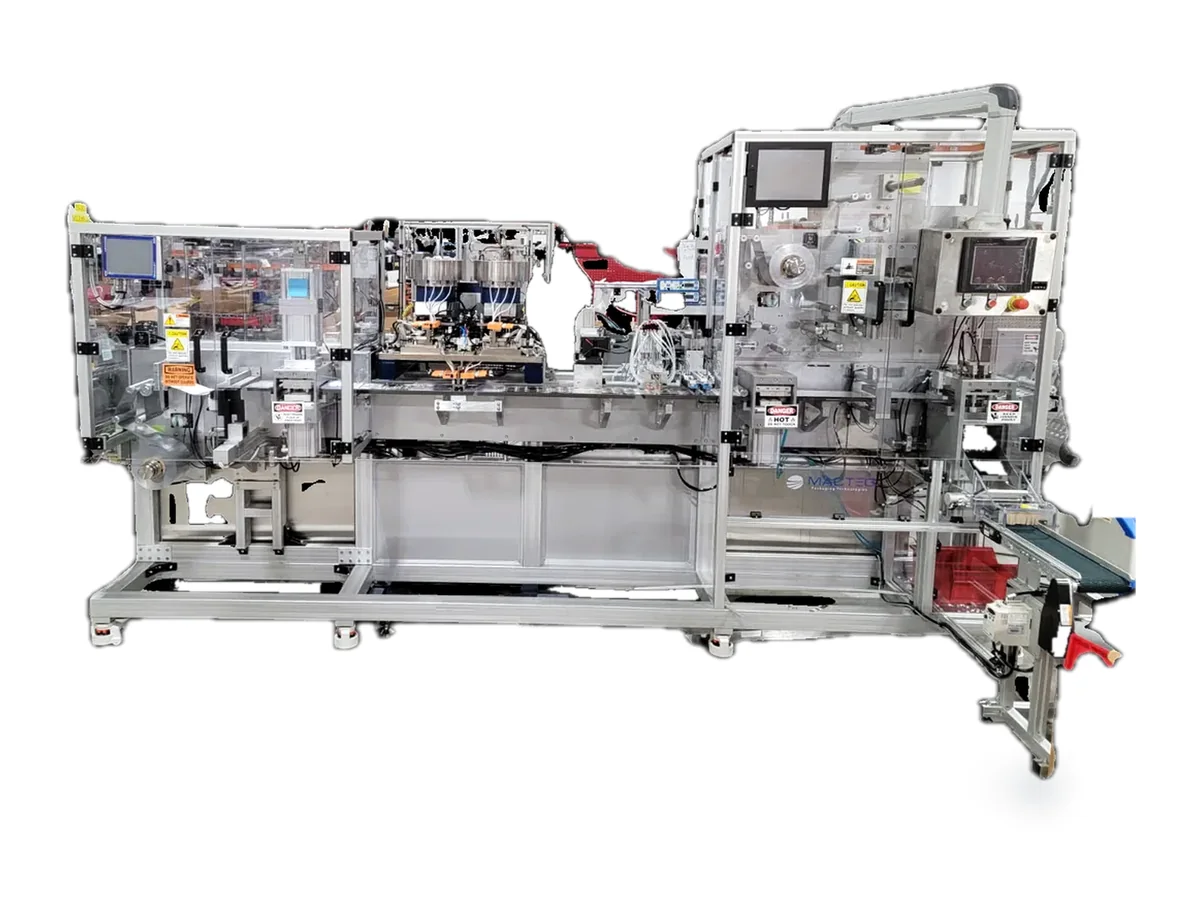
Both our NANO-XL and MT-150XL form-fill-seal machines support thermoforming and cold forming. If your blisters are already formed and filled before they reach the machine, a sealing-only machine such as the MT Table Top Blister Sealer may be the better starting point. For a recent example of this equipment, see how two MT-150 blister packaging machines completed factory acceptance testing.
Which forming film should you consider?
These are general descriptions of widely used materials, not recommendations for a specific product.
- PVC (polyvinyl chloride). The general-purpose thermoforming film: clear, rigid and easy to form. It offers a modest barrier against moisture. Tinted versions, such as amber, are often chosen when a product needs protection from light.
- PVC/PVDC. PVC coated with PVDC (polyvinylidene chloride), which improves the barrier against moisture and oxygen. It is often chosen for products with moderate moisture sensitivity, while keeping the cavity see-through.
- PVC/Aclar. Aclar is a brand of PCTFE (polychlorotrifluoroethylene) film, laminated to PVC. Among clear thermoformable films it is generally chosen when a high moisture barrier is needed and the product should stay visible.
- Cold-form foil. Often called “alu-alu” when paired with aluminum lidding. A laminate built around aluminum foil, typically with plastic layers on each side. Aluminum blocks light, moisture and gases, so it is chosen for highly sensitive products where visibility doesn’t matter.
- Other clear films, such as PET. Common for consumer, device and confectionery packages that need clarity more than barrier.
What lidding should you pair with it?
- Hard aluminum foil for push-through packs, where the product is pushed through the lid.
- Peelable lidding, often paper or film laminated to foil, for peel-open or peel-then-push designs.
- Clear or printed film lidding for consumer products that need to show the product or carry graphics.
Whatever you choose, the lidding’s heat-seal coating has to match the forming film. Printing matters too. Pre-printed lidding must line up with the cavities, while variable data such as lot, expiration date and barcode can be printed in line. NANO-XL lists lot, expiration-date and barcode printing options.
How deep can the cavity be?
Depth depends on the material, the product and the machine. Our published maximum forming depths are 16 mm for NANO-XL and 19 mm for MT-150XL, with forming areas of approximately 80 mm × 95 mm and 150 mm × 150 mm.
Deep packages, such as a device with an instruction leaflet, need a drawing review before anyone promises a format. Send the package drawing and a product sample and we will check fit.
Does the package need to be child-resistant?
Ask this early, because it can change the lidding, the package layout and the testing plan. Child resistance usually comes from the lidding construction and the package design together, and it must be shown by testing to the rules that apply to your market. We don’t make child-resistance claims for a material or a machine; we work from the package design and the requirements you give us.
Why does the material decide the tooling?
Forming tooling for thermoforming and cold forming is different, and cavity dimensions change with the material. Switching materials can therefore mean new forming and sealing tooling and new trials. Plan materials before ordering tooling where you can. If you add a format later, our tooling services let you add new products or formats to a machine you already own.
What should you send us?
- Product samples and dimensions
- What the product is sensitive to: moisture, oxygen, light, or none
- Proposed forming film and lidding, with supplier data sheets
- Package drawing, cavities per card and cards per cycle if known
- Printing: pre-printed lidding, variable data, or both
- Whether child resistance is required
- Batch sizes, number of formats and target output
Our blister packaging machines page compares the three blister models. The RFQ checklist lists the rest of what helps.
Ready to review your materials?
Download the spec sheet from the model page that fits, then request a quote and send samples of your film and lidding. Where practical, we run your samples on a Mactec machine at our facility.
Related buyer guides
- How to Replace an Aging Blister Packaging Machine
- Small Blister Pack Machines for Stability and Prototypes
- Blister sealer or form-fill-seal?
Discuss your project with Mactec
Request an equipment quote using the existing inquiry form. You do not need a finished specification. If you are unsure where to begin, contact Mactec.